

 English
 US

News
Feb 13, 2026
Royal Birkdale Renovation
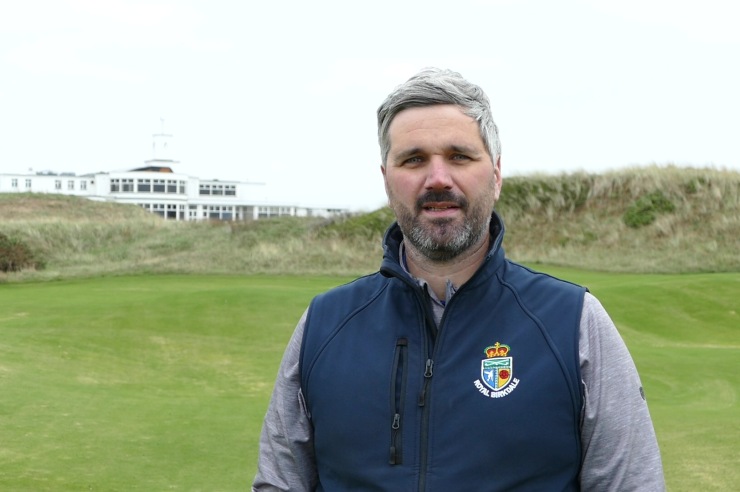
We caught up with Sean McLean, Course Manager at Royal Birkdale Golf Club. This was their maintenance week, and the course was partially closed to...
Published 4th September 2026 News
When a green becomes soft underfoot or holds moisture near the surface, accumulated thatch may be part of the problem. Scarification can help by physically removing material, but choosing the deepest or most aggressive machine is not automatically the best answer.
The useful starting point is a sample of the green's profile. Establish how deerp the unwanted organic layer is, then choose a treatment that reaches it within a manageable amount of disruption.
Thatch is an accumulation of intermingled living and dead plant material between the grass canopy and the soil. A modest organic layer is normal; excessive accumulation can leave a green soft and wet, affecting consistency and playability.
Scarifier blades cut vertically through the turf and lift material out. This physically reduces the layer and creates openings into which air and suitable topdressing can enter. It forms part of organic matter management alongside aeration, topdressing and a balanced growing regime.
Take samples from several representative areas. A single plug from the best part of a green can give a misleading impression of what the whole surface needs. Avoid setting depth solely by the machine's maximum capability: removing healthy rootzone beneath the target layer adds disturbance without necessarily improving the result.
Where a deep thatch problem has developed, a specialist pedestrian or tractor-mounted machine may be needed. Corrective work can involve depths around 25–40mm where the profile justifies them, with suitable equipment and a recovery programme agreed beforehand.
That level of intervention is a different undertaking from routine scarification on well-managed greens. Where the target layer is shallower, working around 8–12mm may achieve the intended removal with much less disruption. The aim is to treat the problem present, rather than make every renovation as severe as possible.
Depth is only part of the decision. Blade spacing, the number of passes and the amount of thatch removed all affect how the green is left. Begin with a trial pass, inspect the material collected and examine the surface before continuing. If more than one pass is needed, don’t do it at 90° as this can result in squares of turf lifting out. Instead, do the second cut at about 30° to the first one.
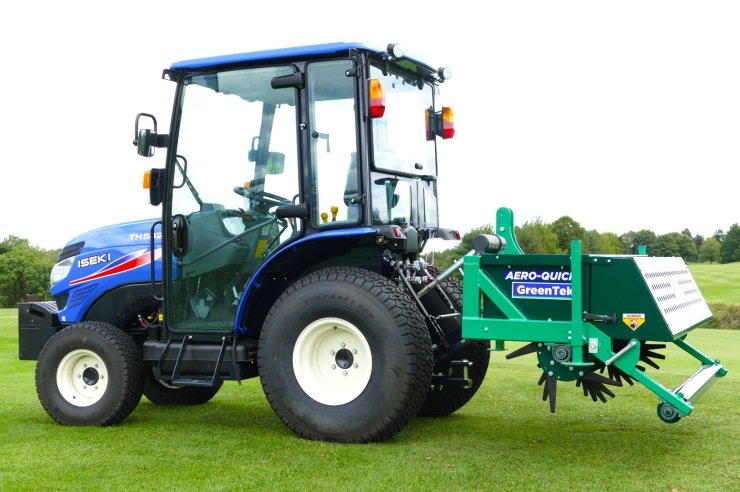
Triplex-mounted equipment offers a practical way to cover greens quickly. GreenTek Thatch-Away Scarifier Cassettes work at depths of up to 12mm, using tungsten-tipped blades with brush spacers that help sweep up and collect the removed material.
For a course already using the Thatch-Away Supa-System Verticutters, the Scarifier Cassettes extend the capability of this System do deeper thatch removal work. When buying for the first time, confirm the complete combination of carrier units, cassettes and fittings required for your particular greens mower.
Collection needs consideration whichever machine is chosen. Material left on the surface still has to be removed before subsequent operations. For lighter routine scarifying, the Thatch-Away units collect the debris in your grassboxes, enabling a quick clean up. But for deeper scarifying, the debris is usually left on the surface and blown into heaps for removal.
Plan scarification for a period of active growth with sufficient time before important fixtures. Spring and late summer or early autumn provide the usual opportunities, but temperature, moisture and turf health matter more than a specific date on the calendar.
Avoid imposing aggressive work on grass already struggling with drought, heat or disease. Follow with the appropriate dressing and aftercare, and judge progress by the recovering surface rather than a promised reopening date.
A set of three Scarifier Cassettes to fit into your Thatch-Away Supa-System units costs around £4,500 in 2026.
Ask your GreenTek dealer to arrange a demonstration of the Thatch-Away Scarifier Cassettes on one of your greens to see how easy this process can become when done with a triplex.
Use profile samples to locate the layer requiring treatment. Routine work may be appropriate at around 8–12mm, while deep corrective treatment needs different equipment and planning. Do not automatically use the machine's maximum depth as a default setting.
No. Verticutting is a lighter process with closer spaced blades, usually to a depth of around 1 – 3mm. This is a regular treatment removing thatch across the whole surface throughout the whole growing season. Grooming is a lighter process still, working in the leaf canopy to manage the grass's growth habit and produce smoother, finer textured turf. Scarification works more aggressively into the organic layer to remove material.
Their maximum working depth is 12mm. They suit removal within that range, but a substantially deeper layer needs assessment and may require specialist corrective equipment like the Graden machines.
Usually spring and autumn when the grass is growing well and conditions support recovery. Consider soil moisture, forecast weather, turf health and the fixture calendar together. Postpone aggressive treatment on stressed turf.
Recovery depends on the severity of treatment, grass species, growth conditions and aftercare. A trial area and experience from previous renovations provide a more useful guide than a universal number of days.
It removes substantial material, but continued accumulation also needs managing. Review the topdressing, aeration, nutrition and growing conditions so that scarification forms part of a programme rather than a repeated emergency treatment.

All products come with a 5 Year Warranty, so you don’t have to worry about breakdowns and repairs.

We guarantee our equipment will do exactly what we claim, or we'll uplift it and refund you 100% in full, right up to 12 months after purchase!

All products with this logo have been built in Britain.

 Request a Hat/Cap