

 English
 US


News
Feb 13, 2026
Royal Birkdale Renovation
We caught up with Sean McLean, Course Manager at Royal Birkdale Golf Club. This was their maintenance week, and the course was partially closed to...
Published 23rd October 2026 News
The year runs across two windows: in-season aeration from September to March, and renovation from April to June.
A core programme of deep-tine aeration, overseeding and fertiliser costs £1,150–£2,300 per pitch per year. Every operation except fraise mowing takes that to £2,550–£5,600; fraise mowing adds £1,500–£3,000.
Most clubs don’t own specialist renovation machinery, but do own the routine maintenance equipment that is used weekly.
Renovation failures are usually caused by timing, not technique, most often by starting too late for soil temperatures to support germination.
Deferring renovation moves the cost rather than removing it, so is a false economy
How much should a full year of pitch renovation cost? And which machines are worth buying rather than hiring in?
If you manage natural turf winter pitches, at a grassroots football or rugby club, a school, a university or a local authority site, this article answers both. GreenTek has been involved with turf maintenance equipment for UK sports grounds since 1969.
This article covers the annual schedule, costs per operation, the own-or-hire decision, and how to get the programme approved. Golf greens and artificial surfaces run on different programmes.
A sports pitch renovation programme is a planned, costed schedule of turf operations covering a full 12 months, split between routine in-season maintenance and end-of-season renovation.
Routine maintenance keeps a pitch healthy while it is played on. Renovation restores it afterwards.
The operations in plain terms:
Slitting: Knife blade cuts letting air and water into the surface during the season.
Deep-tine aeration: Driving tines well below the surface to break compaction in the soil beneath.
Scarification: Cutting through the grass to pull out thatch and organic matter.
Fraise mowing: Stripping off the top layer of the surface, taking organic matter and unwanted grasses with it.
Overseeding: Sowing new seed into the existing surface to restore grass cover.
Topdressing: Spreading sand or rootzone mix to improve levels and drainage.
A programme spreads seven operations across the year, with the heaviest work between April and June once fixtures have finished.
|
Time of year |
Operation |
Purpose |
|
September–March |
Slitting |
Relieve compaction, improve drainage |
|
April–May |
Deep-tine aeration |
Break compaction after the playing season |
|
May–June |
Scarification or fraise mowing (if needed) |
Remove organic matter |
|
May–June |
Overseeding |
Restore grass cover |
|
May–June |
Topdressing |
Improve surface levels and rootzone |
|
May–June |
Fertilising |
Encourage rapid establishment |
|
Throughout season |
Brushing, grooming, rolling |
Maintain surface quality |
The programme should reflect pitch usage, soil type and budget. A single pitch playing two fixtures a week needs less than a busy club pitch carrying five.
A core programme of deep-tine aeration, overseeding and fertiliser costs £1,150 to £2,300 per pitch per year. Adding every operation except fraise mowing brings the total to £2,550–£5,600.
|
Operation |
Typical contractor cost |
|
Deep-tine aeration |
£400–£700 |
|
Overseeding |
£600–£1,200 |
|
Fertiliser |
£150–£400 |
|
Core programme |
£1,150–£2,300 |
|
Topdressing |
£1,000–£2,500 |
|
Scarification |
£400–£800 |
|
All except fraise mowing |
£2,550–£5,600 |
|
Fraise mowing (only where required) |
£1,500–£3,000 |
Topdressing cost varies with the quantity and specification of sand.
Not every pitch needs every operation every year. Scarification and fraise mowing are condition-led, and fraise mowing in particular is reserved for top-tier pitches or surfaces with severe organic matter, contamination or unevenness.
For most clubs and schools, specialist renovation machinery is not worth owning.
Deep-tine aerators, fraise mowers, large disc seeders and high-capacity topdressers are used for only a few days a year. A contractor is usually cheaper.
Routine maintenance equipment is a different case; it earns its keep every week. Basic essentials:
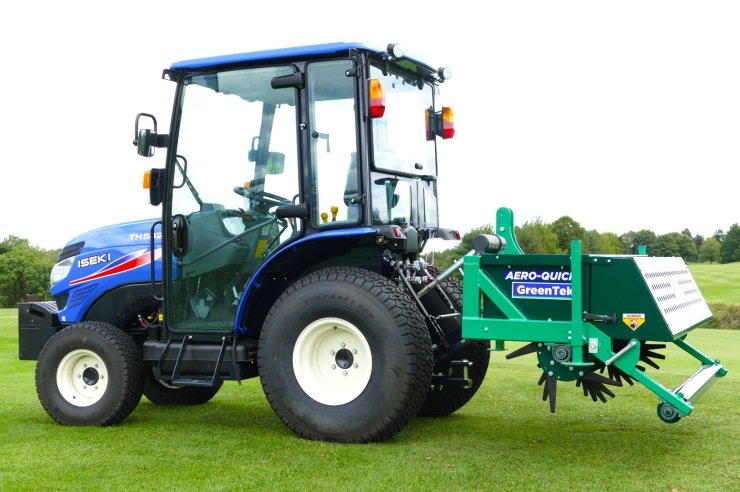
Compact tractor
Rotary roller mower
Slitter aerator
Surface groomer
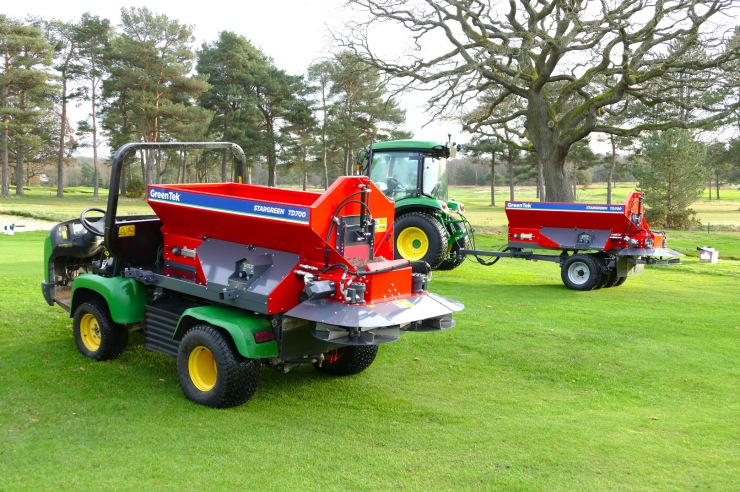
Fertiliser spreader
Brush and roller
Owning this group enables working whenever conditions are right, not waiting for a contractor's diary. See our surface maintenance product range.
Most renovation failures are caused by timing rather than technique. These are the six most common mistakes.
Starting renovation too late after the season ends.
Missing the optimum soil temperature for seed germination.
Skipping deep-tine aeration and treating only the surface.
Applying topdressing that does not match the existing rootzone.
Inadequate seeding of worn areas — goalmouths and centre circles on football pitches, the middle third and around the posts on rugby pitches.
Waiting until problems are severe before acting.
Planning early almost always produces a better surface than reacting late.
If the budget will not cover everything, spend it on deep-tine aeration, overseeding and fertiliser first. These three deliver the largest improvement per pound spent, and together form the core programme priced above.
|
Priority |
Operations |
Cost |
|
Highest |
Deep-tine aeration, overseeding, fertiliser |
£1,150–£2,300 |
|
Next |
Topdressing, surface grooming |
£1,000–£2,500 |
|
Condition-led |
Scarification, fraise mowing |
£400–£3,800 |
This order keeps pitches playable every year, with heavier work scheduled only when the surface needs it.
A written annual programme, costed in advance, is far more likely to gain approval than a series of one-off requests.
Budget holders, such as bursars, estates directors, committees, procurement teams, are rarely turf specialists. They respond to the cost of the work set against the cost of inaction.
Deferring renovation does not remove the cost. It moves it, and it grows. A pitch that misses a cycle carries more compaction and thinner grass cover into the next season, which can quickly degenerate into a mud bath in prolonged wet weather, leading to fixture cancellations.
Present the programme before the season starts, not after the pitch has failed. An emergency contractor visit reads as an unplanned cost. The same spend, set out annually, reads as managed.
One to three days per pitch, depending on the operations involved and the weather.
Slitting can continue during the season. Major renovation should follow the final fixtures, so grass has time to establish.
The following renovation costs more, because compaction and wear carry over. Worn pitches quickly turn muddly, exacerbating competition. The best way to minimise the need for expensive renovations is to increase the amount of regular slitting done throughout the year.
The operations are the same, but rugby surfaces need heavier overseeding in the middle third and around the posts, where wear concentrates.
Without a programme, pitch condition is decided by whatever the season leaves behind. With one, the operations, timing and cost are set in advance, and so is the case you take to the budget holder.
Inspect your pitches and record compaction, wear and organic matter.
Set your renovation window against next season's fixture list.
Cost the operations your pitches need, using the ranges above.
Decide which machines to own rather than hire.
Submit the programme as an annual budget line, with the cost of deferral alongside.

All products come with a 5 Year Warranty, so you don’t have to worry about breakdowns and repairs.

We guarantee our equipment will do exactly what we claim, or we'll uplift it and refund you 100% in full, right up to 12 months after purchase!

All products with this logo have been built in Britain.

 Request a Hat/Cap