

 English
 US

News
Feb 13, 2026
Royal Birkdale Renovation
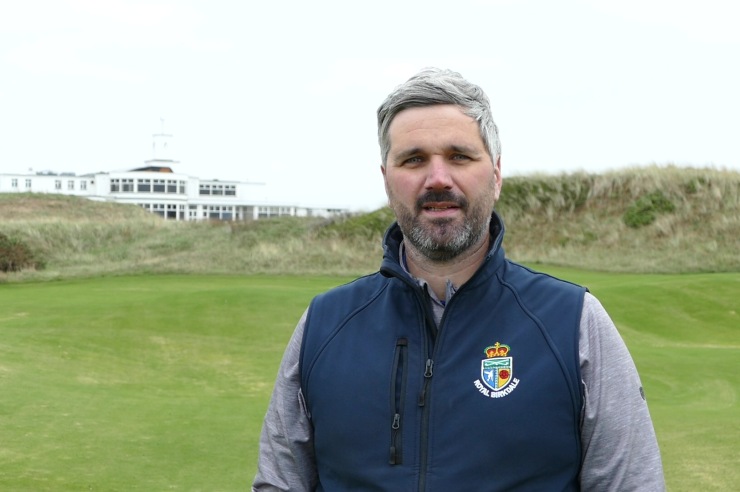
We caught up with Sean McLean, Course Manager at Royal Birkdale Golf Club. This was their maintenance week, and the course was partially closed to...
Published 30th October 2026 News
A turf equipment funding proposal is a written case, ideally no longer than two A4 pages, setting out the problem, the full cost, the expected result and the cost of no action.
Proposals stall when they describe the machine rather than the problem it solves.
Present the total cost of ownership, not the machine price alone: attachments, delivery, training, servicing, warranty and service life.
Show that buying, leasing and contractor hire were considered before recommending a purchase.
Submit against your organisation's budget-setting cycle. A proposal arriving after budgets are agreed waits a year regardless of quality.
Identifying the need for new turf maintenance equipment is usually the easy part. Getting the money signed off is where most requests stall.
Whether you report to a golf club committee, a school bursar, a local authority procurement team or a sports club board, the people approving the spend are rarely turf professionals. They are not judging the machine. They are judging whether the case in front of them is clear enough to say yes to.
GreenTek has supplied UK golf courses and sports grounds since 1969, so we have seen many equipment requests get signed, and many others which stall. This guide covers what to put in a funding proposal, how to present the cost, and when to submit it.
An equipment funding proposal is a written request to a budget holder for approval to buy a specific machine, supported by evidence of the problem it solves and the full cost of owning it.
Treat it as a decision paper, not a persuasion exercise. Its job is to let a non-technical decision-maker decide without needing to fully understand turf agronomy.
In our experience, the proposals that stall are the ones that lead with the machine instead of the problem, leaving the budget holder no way to judge the value.
A committee is unlikely to approve a capital purchase because a machine is newer or better specified. Answer these five questions and you have covered most of what will be asked:
What problem are we solving?
Why does action need to happen now?
What alternatives were considered?
What happens if we do nothing?
Does this represent good value across the life of the machine?
Keep the proposal to a maximum of two A4 pages and cover eight points in order.
The problem: E.g.: Standing water on the 14th green, or a pitch that cannot take fixtures after heavy rain.
The evidence: Photographs of the 14th after rainfall, the dates it was out of play last winter, the contractor invoices.
The proposed solution: How the equipment addresses that problem.
The total cost: Including delivery, training and VAT where applicable.
The expected result: The 14th drains in hours rather than days and stays in play through winter.
Alternatives considered: Buying, leasing or continuing with a contractor.
The cost of doing nothing: Another winter of temporary greens, continued contractor spend, the renovation window missed again.
The timescale: When the equipment is needed, and why that date matters.
Write all eight points about the same problem. A proposal that follows one issue through to outcome is easier to approve than a list of general benefits.
Describe what the equipment achieves, not how it is built. A technical feature belongs in the proposal only if you can state the practical result alongside it.
Instead of writing: "The machine has hydraulic wing folding."
Write: "The wider working width means one operator covers all 18 greens in a morning rather than a full day, so the work fits between fixtures."
Follow every specification with the words "which means", then the outcome. If you cannot finish that sentence, leave the specification out.
Give the committee the full cost of ownership rather than the purchase price. Certainty is what allows a budget holder to approve a figure.
|
Include |
Why it matters |
|
Equipment price |
The primary investment |
|
Attachments |
The complete working specification |
|
Delivery and commissioning |
The true purchase cost |
|
Operator training |
Safe, productive use from day one |
|
Annual servicing |
Ongoing budget planning |
|
Expected service life |
Long-term value |
|
Warranty |
Reduced financial risk |
On a golf course, where equipment covers a large acreage and is used often, an annual cost across the service life is a fair way to present value. On a single sports pitch, the upfront figure is what the budget holder responds to, so present a long-lived machine on durability rather than amortised cost.
Set out all three routes, then recommend one. Showing the options were tested tells the committee the request has been thought through.
|
Route |
Best suited to |
|
Buy |
Regular operations where timing flexibility matters and reserves allow |
|
Lease |
Clubs without reserves; same machine, same control over timing, predictable monthly cost |
|
Contractor |
Occasional specialist operations that are not weather-dependent |
Buying and leasing both give you control over when the work happens. Contractor hire does not, which matters most for operations that depend on a narrow weather window.
Grassroots sports clubs can apply for grant funding covering a substantial share of equipment costs, which turns the proposal from a spending request into a match-funding decision.
Where a grant applies, lead with the club's own contribution rather than the total price, and set out how the investment supports surface quality, participation and the long-term running of the club.
Submit the proposal to match your organisation's budget-setting cycle, not at the point the need becomes obvious. A strong proposal arriving after budgets are agreed waits a full cycle.
|
Organisation |
Typical planning cycle |
|
Golf clubs |
Annual committee budget planning |
|
Schools and universities |
Estates budget set before the academic year |
|
Local authorities |
Annual procurement programme; occasional year-end surplus |
|
Sports clubs |
AGM, committee meetings or grant application windows |
If funding is not available this year, use the intervening months rather than waiting. Book a demonstration, record another season of evidence, and get an updated quotation ready. A proposal that returns with twelve more months of data behind it is a stronger request than the one deferred.
Content aside, approved proposals tend to read the same way.
They open with the problem, not the request. The first line describes the surface, not the machine.
They fit on two pages. Detail sits in appendices.
The numbers reconcile. The figure in the summary matches the figure in the quotation.
No term goes unexplained. Technical language is followed by what it means in practice.
They state what is being asked for and by when, in one sentence, near the top.
Read your draft as though you sit on the committee and know nothing about turf. Anything that does not help that reader decide comes out.
No more than two A4 pages. Quotations, photographs and product literature go in appendices.
Always include one, because it shows costs were researched rather than estimated. Many organisations require a second quotation above a set value, and it demonstrates the options were compared fairly.
Yes. Seeing a machine working on your own surface convinces a decision-maker more than a written specification. Your local dealer can arrange one. Make sure all decision-makers are notified well in advance, and commit to attending.
Ask for the reason, address it, and resubmit at the next budget round. Many purchases are approved at the second time because the proposal was strengthened, not the need.
Identifying the problem on your course or pitch is your job, and you have already done it. Presenting it to someone who does not work in turf is the task that decides whether the equipment arrives. Build the proposal around the problem, cost it in full, show the alternatives, and submit it to the right meeting.
The strongest evidence you can put in front of a committee is the machine working on your own surface. GreenTek dealers arrange demonstrations across the UK, and will provide a written quotation that your proposal will need.
Gather your evidence: maintenance records, photographs, contractor invoices and labour hours.
Request a full quotation from your dealer, including attachments, delivery and training.
Book a demonstration on your own surface before you submit. Ensure all decision-makers will attend
Confirm your next budget-setting date and work backwards from it.

All products come with a 5 Year Warranty, so you don’t have to worry about breakdowns and repairs.

We guarantee our equipment will do exactly what we claim, or we'll uplift it and refund you 100% in full, right up to 12 months after purchase!

All products with this logo have been built in Britain.

 Request a Hat/Cap